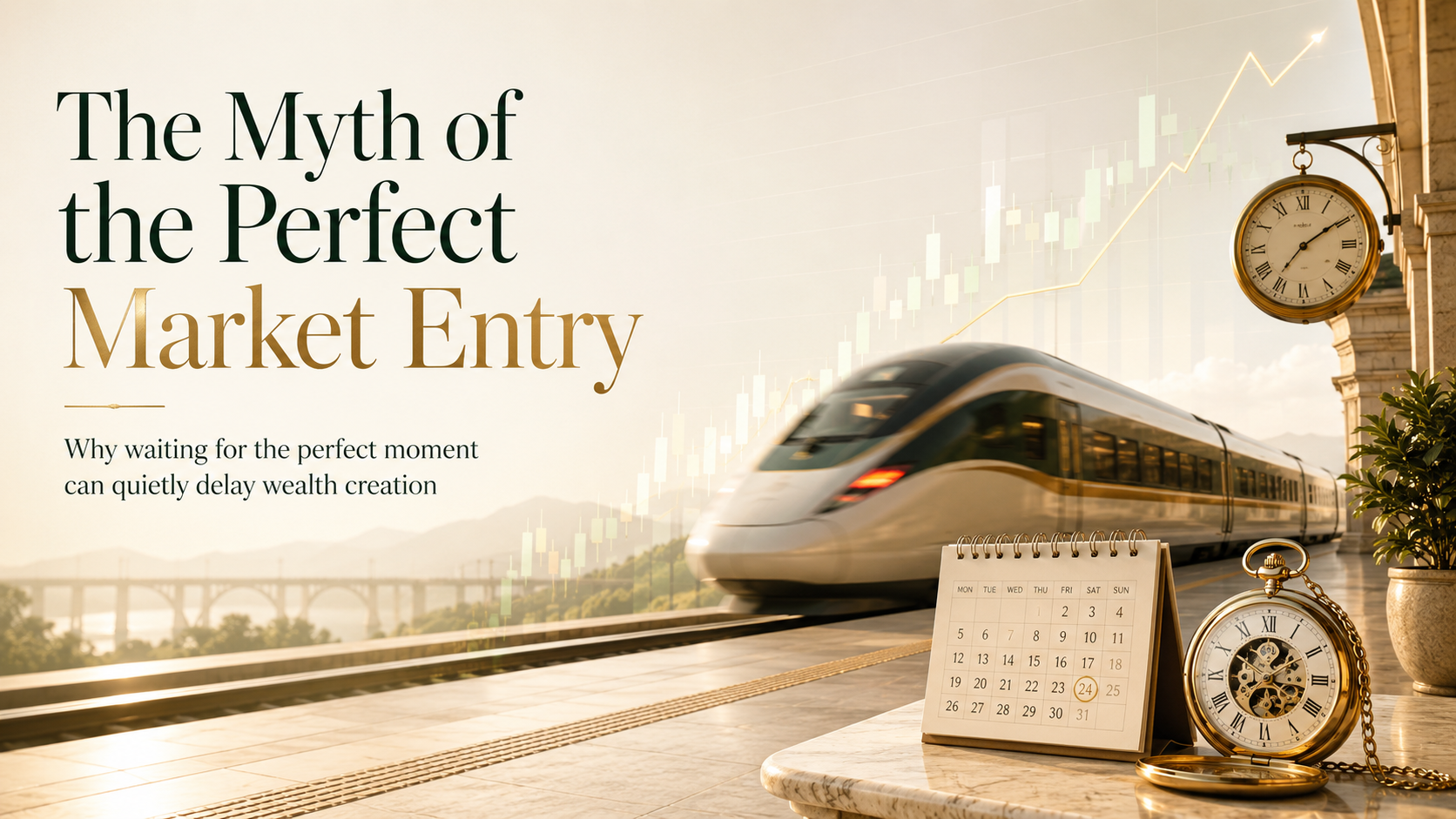
Stop Waiting for the “Perfect Time” to Invest: It’s Already Costing You
For many first-time investors, the biggest obstacle is not money—it is the wait. The wait for the market to settle. The wait for the economy to stabilise. The wait for a clearer sign that the time is right.
This hesitation is rooted in what we call the Myth of the Perfect Market Entry—the belief that there is an ideal moment to start investing, and that patience will eventually reveal it. In reality, this mindset quietly erodes your wealth year after year, as your savings lose purchasing power to inflation while you wait on the sidelines.
A good MFD will tell you: the best time to start was yesterday. The second-best time is today.
The Three Traps of Waiting
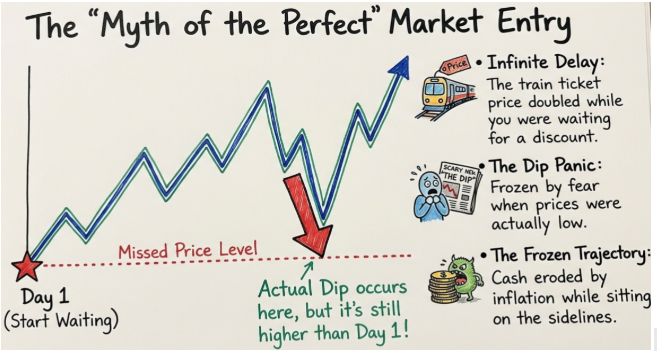
The figures used above are purely illustrative and do not indicate or guarantee future returns.
Waiting for the “perfect moment” tends to play out in one of three ways—and none of them end well:
- The Endless Wait: You hold back, expecting prices to fall. Instead, the market climbs. By the time a correction arrives, valuations are still higher than when you first hesitated. You have gained nothing by waiting.
- The Fear at the Dip: When a genuine market correction does occur, fear takes over. Rather than investing at lower prices, you hold back, thinking it may fall further. The ideal buying window passes unused.
- The Frozen Years: While you wait for certainty, your money sits idle in a savings account. Inflation silently reduces its real value—every year you delay is a year of potential growth you cannot recover.
Why “Time in the Market” Matters More Than Timing It
1. The Power of Compounding
Compounding is the process by which your returns generate further returns. Over time, this creates extraordinary growth—but only if your money is invested and working. Every month spent waiting is a month your financial snowball is not growing.
2. Monitoring the Market Is Exhausting—and Unnecessary
Attempting to time the market requires constant attention to global economic signals, interest rate decisions, corporate earnings, and geopolitical events. This leads to decision fatigue and, more often than not, poor choices driven by emotion rather than strategy. You do not need to monitor the market daily. What you need is a sound roadmap and the discipline to follow it. That is precisely where a qualified MFD adds lasting value.
3. The Best Days Are Unpredictable
Market gains do not accumulate gradually—they tend to arrive in short, unpredictable bursts. Investors who are not in the market during these periods miss out on the bulk of long-term growth. Missing even a handful of the market’s best days can significantly reduce your overall returns. The only reliable way to capture those gains is to remain consistently invested.
A Smarter Way to Get Started
You do not need to invest a large lump sum to begin building wealth. A structured, disciplined approach—ideally with professional guidance—can make the process straightforward and stress-free.
Use SIPs to Invest Consistently
A Systematic Investment Plan (SIP) allows you to invest a fixed amount every month—regardless of market conditions. When markets are down, your fixed amount buys more units; when markets are up, it buys fewer. Over time, this averaging effect reduces the risk of investing at a poor price point and removes the need to time your entry.
Choose Investments Suited to Your Goals
There is no single investment approach that works for everyone. The right strategy depends on your age, income, risk tolerance, existing liabilities, and long-term goals. For instance, a balanced or fund may suit someone who is cautious about market volatility, providing relative stability while still participating in market growth.
This is why it is important to build a roadmap that is tailored to your specific circumstances—rather than adopting a generic approach that may not align with your situation. A MFD can assess your complete financial picture and recommend a structure designed around your needs, not someone else’s.
When Knowledge or Time Is Limited, a MFD Can Help
Not everyone has the time to study market trends, evaluate fund performance, or stay current with tax-efficient investment structures. And that is perfectly reasonable—most people have careers, families, and other priorities that rightly take precedence.
An MFD bridges this gap. Rather than leaving you to navigate complex decisions alone, a MFD helps you:
- Understand different investment options and their features, risks, and suitability considerations.
- Build a structure with clear milestones
- Stay on course during periods of market uncertainty, without making emotionally driven decisions
- Periodically review your financial goals and investment approach as your circumstances change.
Investing is not something that should be figured out alone, especially when you are just starting out. The right guidance at the outset can make a significant difference to your long-term outcomes.
The Best Investment Decision You Can Make Today
Wealth is not built through one perfectly timed transaction. It is built through consistent, disciplined investing over time—starting as early as possible, and staying invested through the inevitable ups and downs of the market.
If you have been waiting for the right moment to begin, consider this your signal. Not because conditions are perfect—they rarely are—but because time in the market is one of the few advantages available to every investor, regardless of their starting point.