The Other Person’s Prescription: Why Acting on Hot Investment Tips Is a Reliable Path to Losses

The Other Person’s Prescription: Why Acting on Hot Investment Tips Is a Reliable Path to Losses

Imagine walking into a pharmacy and picking up a prescription left behind by a previous patient. The medication may be genuine. The pharmacist who dispensed it may be qualified. But the prescription was written for someone else’s condition, on the basis of their medical history, their risk profile, and their specific circumstances. Acting on an…

The Step-Up SIP: How a ₹50,000 Monthly Investment Can Potentially Become More Than ₹10 Crore

The Step-Up SIP: How a ₹50,000 Monthly Investment Can Potentially Become More Than ₹10 Crore

Most people who begin investing make a sensible decision. They choose a monthly SIP amount they are comfortable with, automate it, and allow the process to run in the background. This is a good start. Automation removes emotion from investing and helps investors stay disciplined through market ups and downs. However, there is one problem…

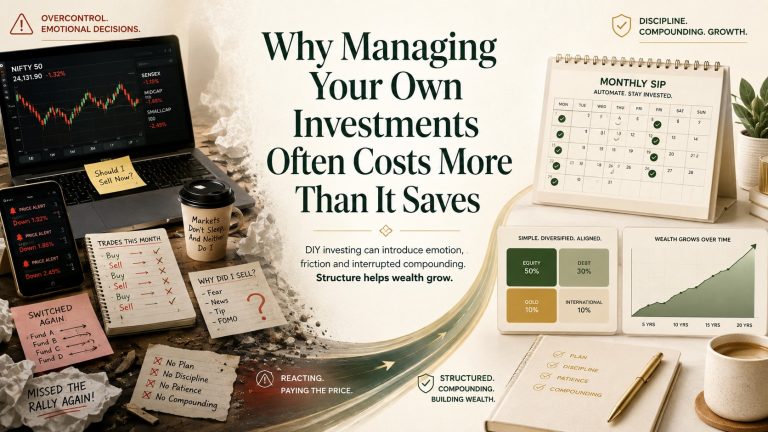
Why Managing Your Own Investments Often Costs More Than It Saves

Why Managing Your Own Investments Often Costs More Than It Saves

There is a pattern that emerges among many intelligent, high-earning professionals once their income reaches a certain level. Having mastered their careers through competence and discipline, they apply the same instinct to their personal finances—deciding to manage their investments themselves. The reasoning is understandable. If you have risen to a senior position through your own…

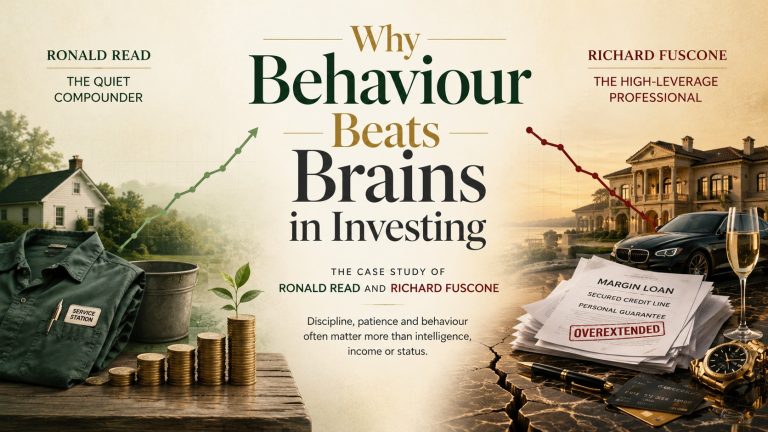
Why Behaviour Beats Brains in Investing: The Case Study of Ronald Read and Richard Fuscone

Why Behaviour Beats Brains in Investing: The Case Study of Ronald Read and Richard Fuscone

We are taught from an early age that extraordinary financial success requires extraordinary intelligence. We assume the market’s top performers are quantitative experts with elite degrees, complex models, and an intricate grasp of macroeconomics. The history of finance, however, presents a compelling counter-argument. In what other field can a person with no formal training, no…

Stop Waiting for the “Perfect Time” to Invest: It’s Already Costing You

Stop Waiting for the “Perfect Time” to Invest: It’s Already Costing You

For many first-time investors, the biggest obstacle is not money—it is the wait. The wait for the market to settle. The wait for the economy to stabilise. The wait for a clearer sign that the time is right. This hesitation is rooted in what we call the Myth of the Perfect Market Entry—the belief that…

The Hidden Cost of Wealth Mirroring

The Hidden Cost of Wealth Mirroring

In an age of constant digital visibility, it has never been easier to observe how others appear to live. When colleagues, peers, or social media contacts showcase premium lifestyles—luxury vehicles, high-end properties, frequent travel—a subtle but powerful psychological mechanism can take hold. This is Wealth Mirroring: the tendency to replicate the consumption patterns of those…

Why Emergency Funds and Insurance Are Not a Drag on Your Wealth—They Are the Foundation of It

There is a persistent belief among investors—particularly those who are newly confident in the market—that keeping money in a savings account or paying insurance premiums is somehow wasteful. If the money is not working hard, it is not working at all. This view is understandable, but it carries significant risk. A portfolio built entirely around…

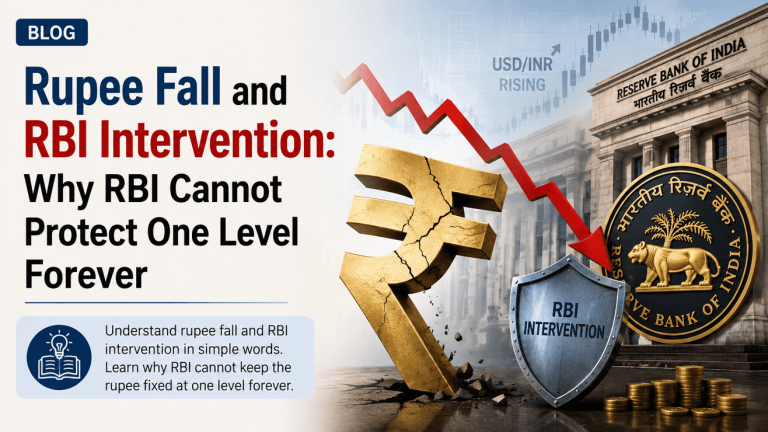
Indian rupee fall and RBI Intervention: Why RBI Cannot Protect Indian rupee at One Level Forever
|

Indian rupee fall and RBI Intervention: Why RBI Cannot Protect Indian rupee at One Level Forever

Rupee fall and RBI intervention are again being discussed after the rupee touched a low of 96.96 against the U.S. dollar. Later, it recovered near 95.23, helped by lower crude oil prices and likely support from the Reserve Bank of India through state-run banks. Many investors are asking one simple question: If RBI has dollar…