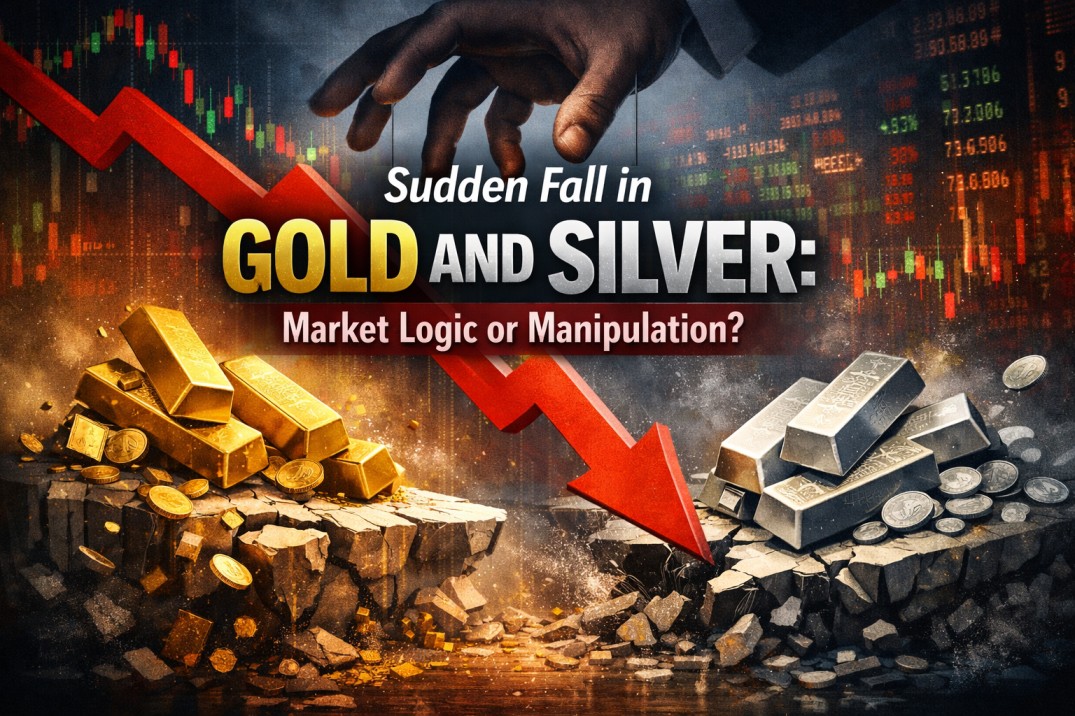
Sudden Fall in Gold and Silver: Market Logic or Manipulation?
When prices fall, it’s often seen as manipulation.
Sharp declines usually trigger suspicion.
“Something feels off.”
“Is this manipulation?”
But there’s clear logic behind these moves, with multiple perspectives at play. Let’s take a closer look.
What Actually Triggered the Fall:
On 28th January, the US Fed hinted that rate cuts won’t happen soon. Higher rates strengthen the dollar, which puts pressure on gold, commodities, and Bitcoin. Since they don’t earn interest, investors move money to safer, interest-earning assets. The sell-off was a strategic repositioning, not panic.
Why Did Prices Fall Again on 30th January?
Trump announced Kevin Warsh as his pick to lead the Fed. Markets saw this as hawkish, reinforcing expectations of higher rates, tight liquidity, and a strong dollar. With liquidity tightening, investors moved to cash and dollar assets, putting more pressure on gold and Bitcoin.
The Bigger Picture: Price ≠ Value
Sharp moves aren’t a signal to chase whatever is rising. Prices often swing because of policy and liquidity, not because the underlying value changed overnight.
How to think about it:
- Prefer assets tied to real cash flows and productivity, businesses that make things, serve customers, and share profits, over stories that only rise when liquidity is loose.
- Ask three simple questions:
- Where is the cash flow?
- What protects it? (moat, balance sheet, governance)
- Is my entry price sensible?
- Diversify the drivers. Balance stores of value with productive assets (equities, credit to the real economy). Avoid single-theme bets that depend on one policy narrative.
- Use rules, not headlines. Pre-decide allocation ranges and rebalance on schedule. Let your plan, not Twitter or TV, decide what you do next.
- Think in years, not days. Long-term wealth usually comes from owning good businesses at reasonable prices and sticking with them, not from reacting to every Fed comment.
Bottom line: Don’t invest because it’s going up; invest because it creates value. Prices will keep reacting to global news. Your edge is owning assets that actually build the economy and a process that keeps you steady when the news cycle doesn’t.